Back
Back
Published on August 21, 2026
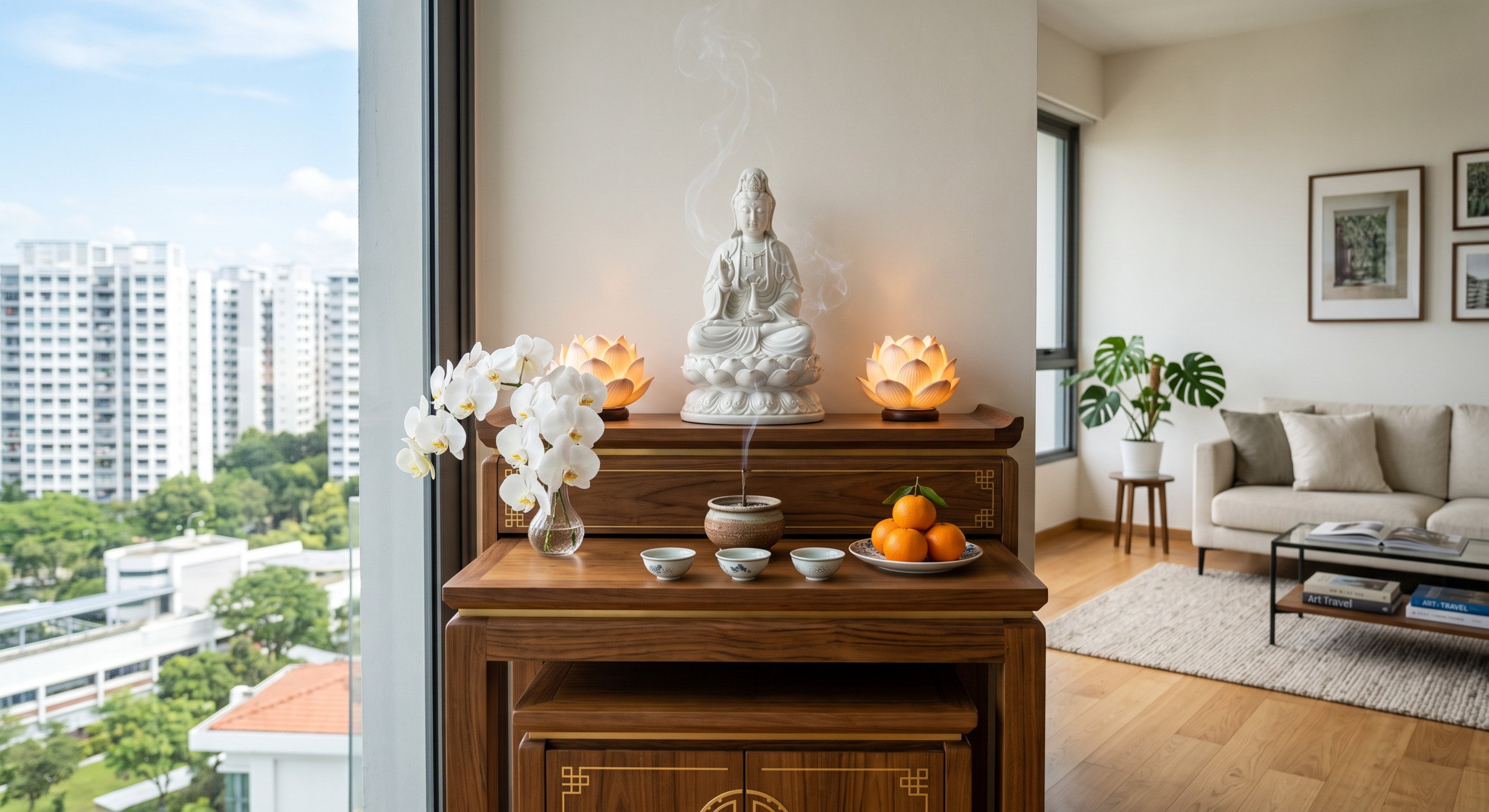
Setting up an altar in your home to venerate Guan Yin, Guan Gong, or your ancestors is a profound act of devotion, filial piety, and spiritual grounding. However, bringing divine energy into your living space requires far more than just finding an empty wall or a quiet corner.
In traditional Chinese metaphysics, the home altar acts as a powerful spiritual anchor. When positioned correctly, it radiates protective energy, blesses the household with peace, and enhances wealth. Conversely, placing an altar inappropriately can inadvertently offend the deities, disrupt the energetic flow of the house, and invite unnecessary friction, health issues, or financial stagnation.
Navigating the complex rules of sacred geometry can be daunting. Understanding the foundational principles of altar placement is the first step toward ensuring your spiritual practices bring true harmony to your household.
Common Mistakes in Home Altar Placement
Different deities have vastly different energetic profiles and requirements. A one-size-fits-all approach is a common pitfall for many homeowners.
- Guan Yin (Goddess of Mercy): As a compassionate, vegetarian deity, Guan Yin's altar should never face the dining table if meat is consumed there. It is also a mistake to place her alongside martial deities like Guan Gong on the exact same level, as their energies (pure Yin compassion vs. strong Yang martial energy) conflict.
- Guan Gong (God of War and Wealth): Often worshipped for protection and business prosperity, Guan Gong's altar is most effective when facing the main entrance directly. This allows his fierce energy to neutralize any negative Sha Qi entering the home and welcome incoming wealth. Placing him deep within the house or facing a blank wall neutralizes his protective purpose.
- Ancestor Altars: Ancestral tablets represent Yin energy. A frequent mistake is placing the ancestor tablet higher than or directly aligned with heavenly deities. Proper hierarchy dictates that heavenly deities must sit higher than ancestors.
Taboo Locations to Avoid
Regardless of which deity you are inviting into your home, certain areas are universally strictly forbidden in standard home feng shui practices:
- Under Staircases: Placing an altar under a staircase implies that the family is constantly stepping over the deities' heads. This suppresses the spiritual energy and is considered highly disrespectful.
- Facing or Sharing a Bathroom Wall: Bathrooms generate impure, foul energy. An altar should never face a bathroom door, nor should it share a direct wall with a toilet.
- Inside the Bedroom: The bedroom is a private space associated with sleep, intimacy, and changing clothes. Placing an altar here shows a lack of reverence and can severely disrupt the occupants' sleep due to the strong spiritual Yang energy.
The Importance of Facing Directions
Beyond avoiding taboos, the specific facing direction of the altar is paramount. It must harmonize with the house's overall energy map (based on the current period and property facing) as well as the breadwinner’s Bazi (birth chart).
Engaging a professional deity placement service ensures that the altar is mathematically and metaphysically aligned to capture auspicious Qi. A master uses a Luo Pan (Feng Shui compass) to pinpoint the precise degree and sector that will activate the "Wealth" or "Nobleman" stars, ensuring the deity's presence actively benefits the family's specific needs.
Why Professional Placement Brings Peace
Setting up an altar is a lifelong commitment. The anxiety of "getting it wrong" often plagues homeowners, especially when unexplained string of bad luck follows a DIY setup.
By utilizing a professional altar placement service, you remove the guesswork. A qualified master will select an auspicious date and time to consecrate the altar, dictate the exact measurements (using Feng Shui dimensions), and guide you through the proper welcoming rituals. This ensures the deities are respectfully seated, allowing you to pray with complete peace of mind, knowing your home is spiritually protected.
Ensure your home remains a sanctuary of peace, respect, and prosperity. Let our experts guide you in honoring your deities and ancestors correctly.
Book your altar placement service today:
Call or WhatsApp: 8369 0114
Email: enquiry@tianlugeomancy.com
Explore more at: https://www.tianlugeomancy.com/altar-placement
References
- Journal of Chinese Religions: "Domesticating the Sacred: Altars and Spatial Organization in Chinese Homes" (Examines the spatial and religious rules governing where deities and ancestors can be placed within traditional and modern domestic architecture). Available at: https://muse.jhu.edu/journal/718
- Asian Ethnology: "The Hierarchy of Spirits: Deity and Ancestor Worship in the Chinese Domestic Sphere" (An anthropological study detailing the strict hierarchical placement between Guan Yin, Guan Gong, and ancestral tablets to maintain household harmony). Available at: https://asianethnology.org/
- Sociology of Religion: "Feng Shui and the Sacred Geography of the Home" (Discusses how modern Asian families integrate ancient geomantic taboos—such as avoiding bathrooms and staircases—when establishing spiritual spaces in urban apartments). Available at: https://academic.oup.com/socrel